

Every society stands on two pillars—men and women—but in reality, it is often the invisible strength of women that holds up the sky when everything else is falling apart. In countless homes, offices, fields, factories, hospitals, and classrooms, women carry the weight of expectations, responsibilities, and emotional labour that the world rarely acknowledges, let alone rewards.
Yet, even as they hold families together, nurture communities, and build nations, women bear the deepest scars of inequality and violence. Worldwide, nearly 1 in 3 women have been subjected to physical and/or sexual violence by an intimate partner, or sexual violence by a non-partner, over the course of their lives, making gender-based violence not just a personal tragedy but a global crisis of humanity. This is not a “women’s issue”; it is a human issue, a societal wound.
And still, women rise. They study, they work, they lead, they fight, they heal, and they love. On Womens day 2026, we must recognise that women are not asking for power; they already have power. They are asking for safety, dignity, and the freedom to live as fully as they deserve.
I love women. They’re the best thing ever created. If they want to be like men and come down to our level, that’s fine.
– Mel Gibson
Womens day 2026 is not just a date on the calendar; it is a mirror we must hold to the world and to ourselves—asking what kind of society we are building for our daughters, our sisters, our mothers, and every woman who dares to dream beyond the boundaries imposed on her. This is my heartfelt tribute, my promise, and my salute to the women of our lives and of our world. –
– Blog Author
Women’s Day 2026
Women are not weak; they are survivors, creators, and leaders
For centuries, the world has told women that they are “weaker,” “more emotional,” “less rational.” Yet, history and everyday life show a different truth: women are among the strongest beings on this planet—not because they are unbreakable, but because they have been broken a thousand times and still choose to heal, nurture, and rise.
Strength is not just the ability to lift weight or wield power; strength is the ability to endure, to rebuild, to forgive, to dream, and to create.
Look at a mother who works during the day, cares for her children at night, and still finds time to listen to her family’s worries. Look at the woman who faces discrimination at work, yet performs with excellence.
Look at the girl who studies late into the night under a streetlamp because there is no electricity at home, but she refuses to surrender her dream. That is strength.
Women carry life within them, nurse children, hold families together, support ageing parents, and still show up for their jobs and communities. They navigate a world that constantly questions their worth and still choose to love, to create art, to build businesses, and to fight for justice.
On Womens day 2026, let us rewrite the narrative: women are not “the weaker sex.”
They are the backbone of our existence.
Violence against women: The wound we often look away from
Violence against women is not just an act of physical harm; it is the systematic breaking of spirit, trust, and confidence. It leaves bruises not only on bodies but on generations.
Worldwide, updated estimates show that violence against women is a pervasive public health and human rights crisis, with both immediate and long-term impacts on physical and mental health, children’s well-being, and the social fabric. One in three women globally experience physical or sexual violence in their lifetime, often at the hands of someone they know—an intimate partner. Behind this statistic are millions of silenced stories: the woman who cannot sleep without nightmares, the girl who drops out of school because she no longer feels safe, the mother who smiles for her children while her soul aches in silence.
Non-partner sexual violence alone affects an estimated 6% of women aged 15–49—that is about 160 million women worldwide who report such violence at least once in their lifetime since the age of 15, and even this is likely an underestimate.
Across many countries, about 22% of women report having experienced physical or sexual violence from an intimate partner, and in some regions, more than 30% of women report lifetime interpersonal violence by a partner.
These are not just numbers; they are fractures in our collective conscience.
Imagine a young girl in a small town, brilliant in her studies, passionate about becoming a doctor. One day, she is harassed on her way to school. Then again. And again. The stares, the comments, the unwanted touches become more frequent. Her parents, terrified, tell her to stop going out alone, to dress differently, to come home early. The easiest solution? Stop sending her to school. A potential doctor, scientist, or leader is quietly erased from the future, not by fate, but by a society that failed to protect her.
When we allow violence and harassment to continue, we are not just hurting individual women; we are weakening our schools, our workplaces, our democracy, and our future.
Sexual harassment: The invisible prison
Sexual harassment is often dismissed as “small incidents,” “boys being boys,” or “just jokes.” In reality, it is one of the sharpest tools used to control women’s mobility, confidence, and participation in society. It is not just about the moment of harassment; it is about the message it sends: “You are not safe here. This place is not for you.”
From workplaces to public transport, from schools to digital spaces, women are forced to calculate risk before they take even a simple step outside. Many women learn, from a young age, to carry keys between their fingers, to watch for exits, to text their live location to a friend, to pretend to be on a call, to choose “safer” clothes—not because they want to, but because they have to.
The emotional impact is profound. Sexual violence and harassment are linked to depression, anxiety, post-traumatic stress, and a loss of self-worth. Many women internalise the fear and start believing that their ambitions are dangerous. How many brilliant minds have we lost because the world made them feel unsafe?
On Womens day 2026, we must promise ourselves that we will not be silent witnesses. Silence is complicity. Harassment does not become normal just because it is common.
Human trafficking: When humanity is sold
Among the darkest crimes against women is human trafficking—where human beings, mostly women and children, are bought, sold, and exploited as if their lives and bodies are commodities. Trafficking is not just a legal crime; it is a moral collapse.
In India, the country has become a source, transit, and destination for trafficking. Many victims come from impoverished rural areas or urban slums, lured or coerced with false promises, then trapped in forced labour or sexual exploitation. A monitoring initiative recorded thousands of trafficking victims from India in 2020, with over 5,000 labour trafficking victims, including more than 2,800 trapped in bonded labour and over 1,400 in sex trafficking; around 62% of these trafficking victims were female.
The impact on women who are trafficked is devastating.
They suffer from deep mental health issues like PTSD, depression, and anxiety, and have higher risks of HIV, tuberculosis, and other sexually transmitted infections, often without access to healthcare or justice. In some Indian states, like Maharashtra, West Bengal, and Jharkhand, the majority of identified trafficking victims are female—sometimes as high as 94% among recorded cases.
Each of these women had a name, a dream, a family, and a future. Trafficking does not just steal bodies; it steals lives, stories, and generations.
When we look away from trafficking, we are allowing slavery to modernise itself quietly in our neighbourhoods, industries, and economies. When we truly honour Womens day 2026, we must use our voice to demand stronger laws, better enforcement, and more compassion for survivors.
How violence against women hurts the whole society
Every incident of violence against a woman ripples outward into the entire society. It is not just “her problem” or “her family’s issue”; it is our collective loss.
Violence and harassment take women out of schools and workplaces, limit their mobility, and reduce their participation in public life, which in turn harms economic growth, democracy, and social progress. When women cannot work safely, economies lose productivity, households lose income, and children lose better opportunities.
Gender-based violence leads to worse health, reduced access to education and jobs, and poorer development outcomes for survivors and their children.
A child who grows up watching his mother being abused learns, silently, that violence is a language. A girl who grows up seeing her mother silenced learns that survival sometimes means shrinking herself. Thus, the cycle continues—unless we choose to break it.
Every time we protect a woman, every time we support a survivor, every time we challenge sexism, we are not just helping one person; we are changing the course of the future.
Women are not weak; they are survivors, creators, and leaders
For centuries, the world has told women that they are “weaker,” “more emotional,” “less rational.” Yet, history and everyday life show a different truth: women are among the strongest beings on this planet—not because they are unbreakable, but because they have been broken a thousand times and still choose to heal, nurture, and rise.
Strength is not just the ability to lift weight or wield power; strength is the ability to endure, to rebuild, to forgive, to dream, and to create.
Look at a mother who works during the day, cares for her children at night, and still finds time to listen to her family’s worries. Look at the woman who faces discrimination at work, yet performs with excellence.
Look at the girl who studies late into the night under a streetlamp because there is no electricity at home, but she refuses to surrender her dream. That is strength.
Women carry life within them, nurse children, hold families together, support ageing parents, and still show up for their jobs and communities. They navigate a world that constantly questions their worth and still choose to love, to create art, to build businesses, and to fight for justice.
On Womens day 2026, let us rewrite the narrative: women are not “the weaker sex.” They are the backbone of our existence.
Indian history: A legacy of powerful women
Indian history is rich with stories of women who refused to surrender to their circumstances and instead reshaped society.
Rani Lakshmibai of Jhansi stood as a symbol of courage during the 1857 uprising, leading her army into battle against colonial rule and becoming an enduring icon of resistance and bravery.
Savitribai Phule, along with Jyotirao Phule, opened one of the first schools for girls in India in the 19th century, facing abuse, stones, and social boycott, yet continuing her mission of educating girls and oppressed communities.
Sarojini Naidu, known as the “Nightingale of India,” was not only a poet but also a key leader in the Indian freedom struggle, later becoming the first woman to serve as a governor in independent India.
Kamaladevi Chattopadhyay played a crucial role in the freedom movement and in reviving Indian handicrafts and handlooms, helping artisans, especially women, reclaim their livelihoods and dignity.
Captain Lakshmi Sahgal, a leader of the Indian National Army, showed that women could stand shoulder to shoulder in the struggle for independence, breaking gender norms in the military sphere.
Indian tradition also honours women as embodiments of Shakti—divine energy. Goddesses like Durga, Kali, and Saraswati are seen as symbols of power, destruction of evil, and wisdom. It is a deep irony that a civilisation which worships goddesses still struggles to ensure safety and respect for its women. But these stories remind us that courage and leadership by women are not new; they are the foundation of our history.
“Educate your women and the nation will take care of itself.”
Women who changed the world
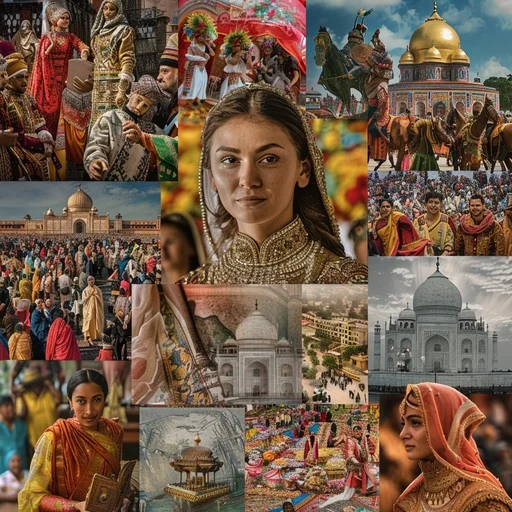
Across the world, countless women have changed history, science, politics, and culture—often in the face of enormous resistance.
Marie Curie not only coined the word “radioactivity” but also became the first woman to win a Nobel Prize and the first person ever to win two Nobel Prizes in different scientific fields, revolutionising cancer treatment and physics.
Rosa Parks, by simply refusing to give up her bus seat to a white passenger in 1955, ignited the Montgomery Bus Boycott and became a symbol of the Civil Rights Movement, helping to dismantle legal segregation in the United States.
Ruth Bader Ginsburg spent her life fighting gender discrimination in the law and later served on the US Supreme Court, shaping historic rulings that expanded civil rights and gender equality.
Malala Yousafzai, after surviving a brutal attack for daring to go to school, became a global advocate for girls’ education and the youngest Nobel Peace Prize laureate.
Ellen Johnson-Sirleaf became the first elected woman head of state in Africa as the president of Liberia and worked to reduce national debt, fight corruption, and empower women and girls.
Wangari Maathai from Kenya founded the Green Belt Movement, mobilising women to plant millions of trees, linking environmental protection with women’s rights, and later winning the Nobel Peace Prize.
Sally Ride became the first American woman in space in 1983, inspiring countless girls and women to pursue careers in science and space exploration.
From writers like Jane Austen, who subtly challenged social norms through her novels, to suffragists like Emmeline Pankhurst and philosophers like Mary Wollstonecraft, who argued for women’s equal rights, the tapestry of history is deeply woven with women’s courage and brilliance.
Their stories are not just about women; they are about humanity choosing progress over prejudice.
Everyday heroines: The women we know but rarely acknowledge
While history books mention queens, scientists, and revolutionaries, there are millions of unsung heroines we may never hear about in speeches or see in newspapers—but they are no less extraordinary.
The single mother who works two jobs to pay for her children’s education, silently sacrificing her own dreams so that her children can dream bigger.
The young woman in a village who persuades her parents to let her continue her studies, then returns as a teacher to uplift an entire generation.
The nurse who holds a stranger’s hand in the hospital, staying beyond her shift because the patient’s family is far away.
The domestic worker who raises other people’s children with love while her own children wait for her at home.
These are the women who keep society functioning. They are not on magazine covers, but they are the reason the world does not collapse.
On this Womens Day 2026, let us remember to honour not only the famous names but also the women in our own lives—our mothers, grandmothers, sisters, friends, colleagues, teachers, and neighbours—whose strength often goes unnoticed.
The emotional cost women pay every day
Beyond statistics lies an emotional landscape that is rarely visible. Many women live with a constant background noise of fear and caution. Before stepping out, they think about safety. Before speaking up, they calculate how much backlash they can handle. Before disagreeing, they wonder if they will be called “too loud,” “too emotional,” or “too ambitious.”
This constant self-editing is exhausting.
Women who survive violence or harassment often carry shame that does not belong to them. They are made to feel responsible for the harm inflicted on them because of their clothes, their choices, or their presence in a certain place at a certain time.
Families sometimes hush them to “protect honour,” workplaces avoid “controversy,” and institutions delay justice until the survivor feels it is better to remain silent.
Yet, in spite of all this, women continue to love, to support others, to show kindness, to smile, and to give. That is emotional strength of the highest order.
We must, as individuals and as societies, create spaces where women can share their pain without fear, where they can seek help without judgement, and where survival is not a lonely battle but a shared healing.
Why empowering women is the smartest investment we can make
Supporting women is not charity. It is not a favour. It is the smartest, most impactful investment any society can make.
When women are safe, educated, and economically empowered, entire communities thrive. Gender-based violence undermines development, health, and economic outcomes, while preventing it and ensuring women’s equality boosts social and economic progress. Women reinvest a significant portion of their income into their families and communities, improving health, nutrition, and education for the next generation.
Empowering women means:
* More children in school
* Fewer families in poverty
* Stronger democracies with more diverse leadership
* Better decisions in business, politics, and communities
* Healthier, more resilient societies
On Womens day 2026, let us shift our view from “helping women” to “partnering with women” to build a better world.
What we must do: Our responsibility, our promise
Supporting women cannot be a one-day gesture. It must be a daily commitment. Each of us—regardless of gender—has a role to play.
Here is what we can start doing, right now:
* Listen and believe When a woman shares her experience of harassment, violence, or discrimination, believe her. Her courage to speak up is already a victory over fear.
* Call out sexism and harassment. Do not laugh at sexist jokes. Do not look away when you see harassment. Speak up, report, support. Silence protects the wrong side.
* Support survivors and divorcees instead of asking, “Why didn’t you speak earlier?” ask, “How can I support you now?” Stand with surviirorceesvors emotionally, socially, and legally.
* Share responsibilities at home Equality begins at home. Domestic work, caregiving, and emotional labour are not “women’s duties.” They are family responsibilities.
* Encourage education and dreams Support girls and women in studying what they love, choosing careers they want, and making decisions about their own lives and bodies.
* Advocate for stronger laws and better enforcement Laws against violence and trafficking must not only exist on paper; they must be implemented. Demand accountability from institutions and authorities.
* Celebrate women without limiting them to roles Women are more than mothers, wives, or daughters. They are individuals with their own identities. Appreciate them for who they are, not just for what they do for others.
My personal promise: Standing with women
My view and how I understand women is already published long ago, in a different article – Womens Day 2021.
From my end, Womens day 2026 is not just an occasion; it is a commitment.
I stand with every woman who has ever felt unsafe walking down a street.
I stand with every woman who has ever been told “you can’t” and still went on to do it.
I stand with every survivor who carries invisible scars but still chooses to smile.
I stand with every girl who dreams of a world where she does not have to ask for permission to be herself.
My promise is:
* To use my voice to challenge stereotypes, sexism, and violence wherever I see it.
* To support the women in my life with respect, empathy, and equality.
* To listen more, judge less, and stand up more often.
* To remember that every step towards respecting women is a step towards healing our society.
Are you with me?
A vision for the future: A world worthy of our daughters
Imagine a world where a young girl can walk out at night with the same sense of safety as a young boy.
Imagine a world where a woman’s “no” is respected instantly, without question. Imagine a world where daughters are celebrated as much as sons, where promotions are based on merit and not gender, where leadership tables always have women at them, not as tokens, but as equals.
This world is not a fantasy. It is a possibility waiting for us to choose it.
We already have laws, data, and voices calling for change. What we need is collective courage. Courage to unlearn old mindsets, to change behaviours, to educate the next generation differently, and to refuse to tolerate any form of violence or discrimination.
Women have carried humanity through its darkest times—as mothers, caregivers, fighters, scientists, leaders, and creators. They have stood strong in wars, pandemics, revolutions, and social upheavals. They have shown us how to turn pain into purpose and oppression into opportunity.
Now it is our turn to stand for them, beside them, and with them.
On this Womens Day 2026, let us not simply say, “Happy Women’s Day.” Let us say:
“We see you. We honour you. We believe you. We stand with you. We will fight for a world where you are safe, respected, and free.”
Because when women rise, the whole world rises with them.



THANK YOU FOR BEING THE SUPPORT TO ME.
YOU NURTURE ME. YOU PROTECT ME. YOU UNDERSTAND ME.
I hope I do, Khushbu.
Thank you.
Love the article and you have ARTICULATED it beautifully!
Grateful for celebrating Women 🙏
Thank you Raseshvari.