
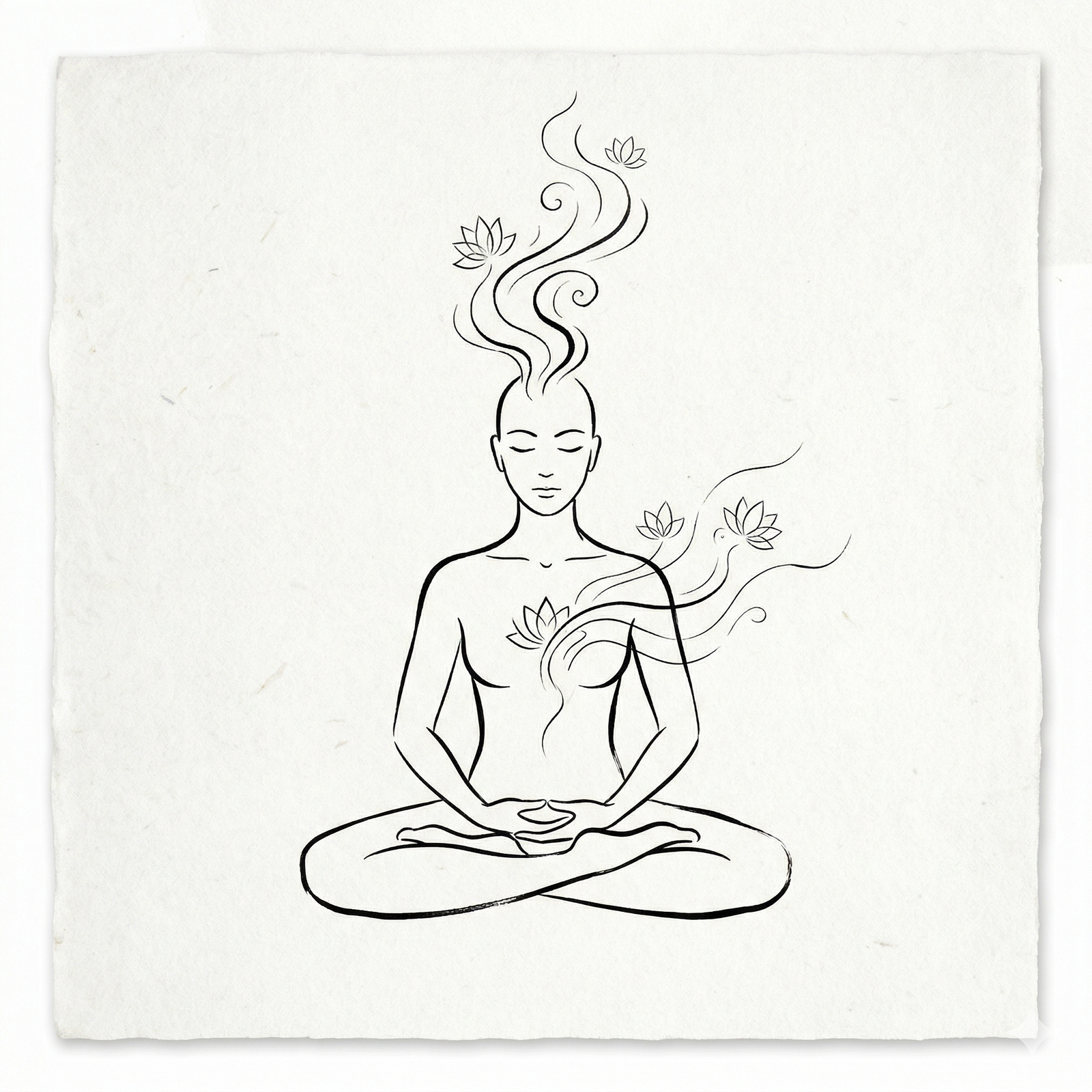

In a world that pulses with the relentless rhythm of “I want”—more success, more love, more validation—the soul quietly yearns for something deeper: a return to effortless being. This is the secret to soulfulness and spirituality: releasing the grip of ego’s “I” and desire’s endless “want,” not to diminish life, but to reveal its boundless essence and inculcate soulfulness and spirituality.
Soulfulness, on the other hand, is the opposite movement. It’s not about accumulation but surrender; not about asserting identity but dissolving it. The secret to soulfulness is hidden in plain sight: letting go of “I” and “want.” It’s an art that requires patience, deep awareness, and a willingness to step into silence when the world clamors for noise.
And, spirituality is the lived experience of boundless presence that emerges when the ego’s “I” dissolves and the restless pull of “I want” fades. It’s not a belief system, ritual, or distant goal—it’s the natural state of wholeness beneath identity and desire, where life flows effortlessly through you as pure awareness.
Let us journey through this secret — to understand what it means to let go, why it matters in our modern reality, and how to practice it daily without withdrawing from the world.
The Birth of “I”: The Ego’s Mask
The first step to understanding soulfulness is to recognize the nature of the ego. The “I” originates as a psychological boundary — a necessary tool to navigate life. It helps us separate what is “me” from what is “not me,” giving rise to decisions, preferences, and responsibilities. In its healthy form, ego creates functional identity: we know our name, our skills, our roles. But slowly, this boundary solidifies and becomes belief. We stop treating “I” as a useful construct and begin worshipping it as the truth.
The child who naturally says “I am happy” one day learns “I must be better.” That subtle shift marks the beginning of internal fragmentation. The “I” becomes not just a name but a project — something to constantly build, protect, and display. Soon, every experience is filtered through this lens: Am I respected? Am I successful? Am I more than others?
Interestingly, ancient wisdom traditions often describe ego as a shadow of consciousness. In Sanskrit philosophy, the ego (Ahamkara) is the self-sense that attaches consciousness to body and mind. It isn’t evil but limiting — like a small circle drawn around infinite space. Soulfulness and Spirituality begin when we start erasing that circle.
The Chain of “Want”: Desire as Modern Hunger
Once “I” is established, “want” naturally follows. “I want” — two simple words that summarize the movement of desire.
Desire, like ego, isn’t inherently bad. It fuels creative evolution and gives meaning to human effort. Wanting to learn, to love, to grow — these are beautiful impulses. The problem begins when wanting becomes chronic identity. When “I want” becomes “I am my wants.”
This subtle addiction to wanting keeps the mind restless. Even after a goal is achieved, satisfaction quickly evaporates, replaced by a new craving. It’s like drinking saline water — the more we drink, the thirstier we become. Psychology calls this the “hedonic treadmill,” where happiness constantly adapts to new circumstances, leaving us perpetually chasing the next dopamine spike.
Spiritually, desire is viewed as the glue that binds consciousness to suffering. Buddhism calls it Tanha — the thirst that creates attachment and reincarnation into mental patterns. The moment we utter “I want,” a psychological contract forms: “Until I get this, I cannot be complete.”
Thus, the path to soulfulness and spirituality involves breaking that contract — not through suppression but understanding.
Ego and Desire: Two Sides of the Same Mirror
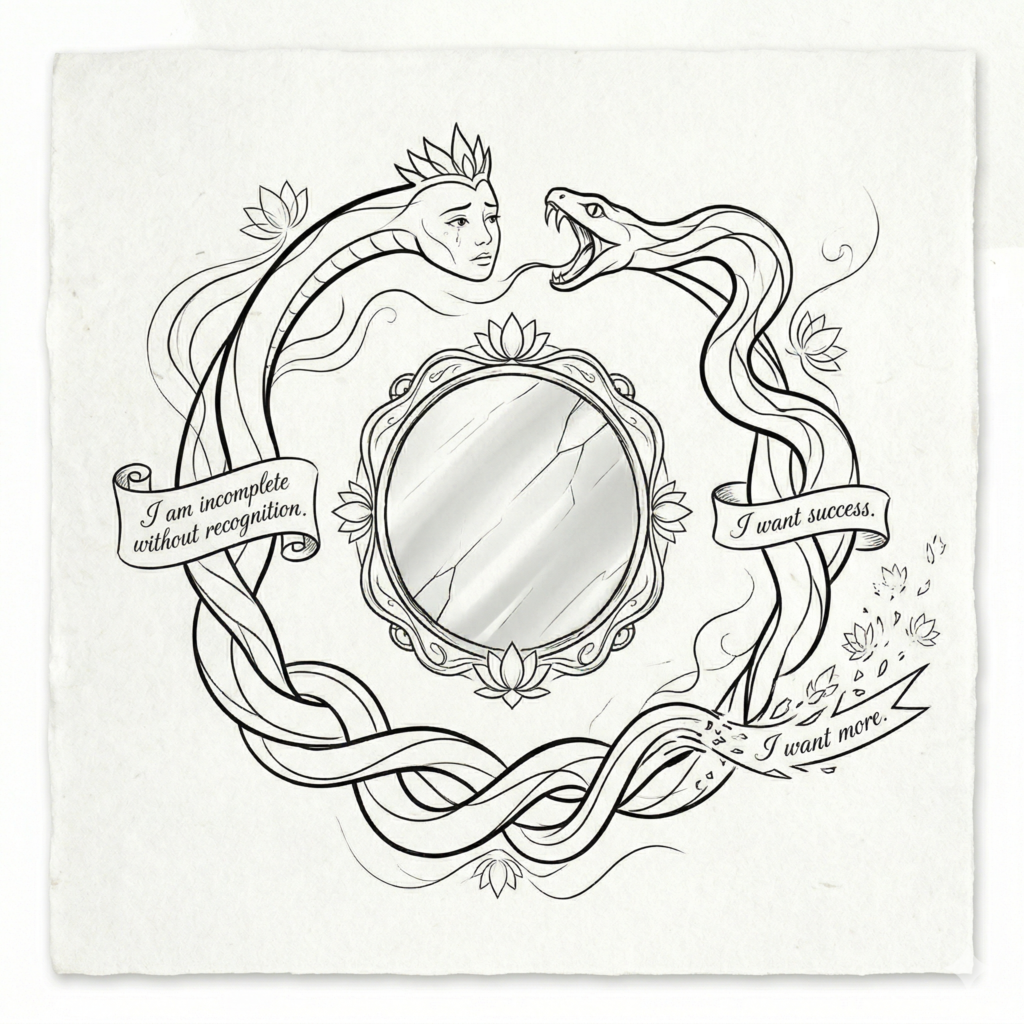
Ego and desire are intertwined, feeding each other like two serpents chasing their own tails. The ego says, “I am incomplete without recognition,” and desire rushes in to fill that gap: “I want success.” The satisfaction of that desire briefly boosts ego, but the pleasure fades, and a new “want” emerges — affirming the ego’s fragility.
In our material world, this cycle is glorified. Productivity culture tells us we must “want” endlessly. Self-help literature romanticizes ambition. Even spiritual markets often disguise ego under divine garments — “I want enlightenment,” “I want peace,” “I want to be the best version of myself.”
But if we observe closely, every “I want” begins with resistance to the present moment. It says, “This is not enough.” That resistance creates separation between what is and what should be, between being and becoming. The soul, however, lives fully in what is. It doesn’t seek; it witnesses. It doesn’t claim; it radiates.
The journey towards soulfulness and spirituality dawns when we stop feeding that loop — when the mind learns to rest without immediately reaching for more.
Letting Go of “I”: The Art of Dissolving Identity
Letting go of “I” doesn’t mean losing individuality or self-respect. It means releasing attachment to roles and stories we constantly replay in our head. We can still act, achieve, and communicate — but without clinging to those actions as definitions of who we are.
Here’s how the process unfolds:
- Observe without ownership: When thoughts arise — “I’m angry,” “I’m tired,” “I’m not good enough” — notice the emotion but drop the label. The anger is happening, but it’s not you. The tiredness exists, but it doesn’t define you.
- Practice anonymity in emotion: If you help someone, forget to record it. If you achieve something, let silence digest it. This invisibility builds internal strength.
- Speak less from “I”: Our speech reinforces identity constantly — “I think,” “I want,” “I believe.” Try speaking from observation instead: “This feels true,” “This idea arises,” “This possibility exists.” Over time, the inner chatter begins to soften.
- Witness your image: The most subtle form of “I” is our imagined personality — the curated version of ourselves shown to the world. By observing this image as an actor, we realize we are not the actor, but the awareness behind it.
Letting go of “I” is similar to peeling layers from an onion. At first, it feels uncomfortable — like losing shape. But gradually, beneath the layers, something vast and luminous emerges: pure awareness, unbounded by story.
Letting Go of “Want”: The Surrender to Enoughness
If letting go of “I” is the beginning of freedom, letting go of “want” is the experience of freedom. Together, they dissolve the illusion of separation that fuels suffering.
The Buddha described this state as the “end of craving,” not by renouncing life but by living it without attachment. To let go of “want,” one must cultivate contentment (santosha) — an awareness that everything arriving in the moment is already sufficient for wholeness.
That doesn’t mean you stop setting goals or practicing ambition; it means you act from overflow rather than scarcity. When “I want” transforms into “I serve,” desire becomes devotion.
Consider this shift:
- “I want to be loved” → “I am love.”
- “I want success” → “I express truth and it creates success naturally.”
- “I want peace” → “I am peace when I stop resisting life.”
It’s the same impulse, but purified through awareness.
Letting go of “want” doesn’t make life dull; it makes it radiant. You start noticing subtle beauty — the kindness in strangers, the colors of dawn, the silence between words. There’s no urge to chase these moments; simply witnessing them feels like fulfillment.
The Repercussions in a Materialistic World
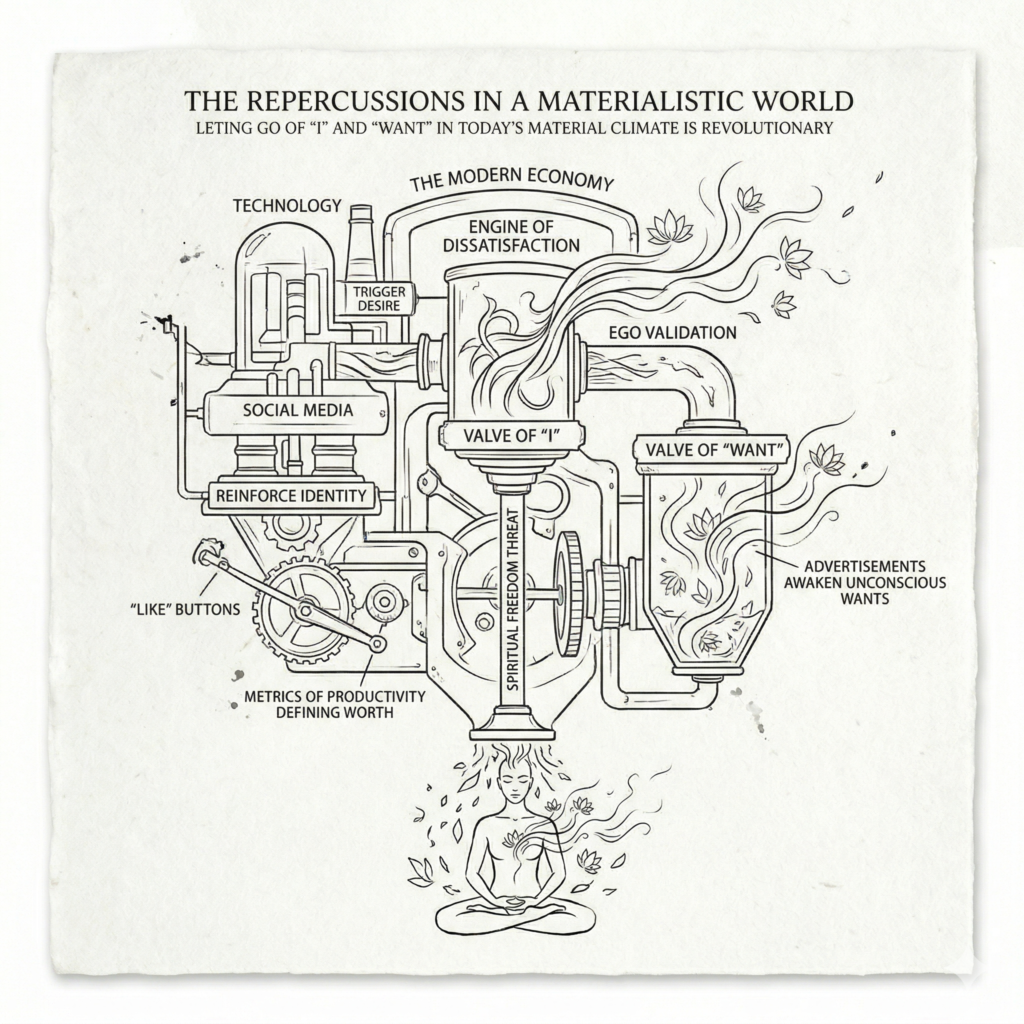
To let go of “I” and “want” in today’s material climate is revolutionary. The modern economy thrives on dissatisfaction; spiritual freedom threatens its engine. Everything from technology to social media is designed to reinforce identity and trigger desire. “Like” buttons feed ego validation; advertisements awaken unconscious wants; even metrics of productivity define our worth by how much we do.
When an individual begins to move away from this paradigm, society often misinterprets it as laziness or disengagement. But true soulful living isn’t withdrawal — it’s depth. A person who lets go of “I” becomes more empathetic, creative, and clear. They approach problems not from personal gain but collective harmony.
In business, such individuals make decisions based on authenticity rather than competition. In relationships, they listen without needing to prove or win. In leadership, they inspire through presence, not persuasion.
The irony is that those who truly let go of “want” eventually attract abundance effortlessly. Their lack of hunger creates magnetic calmness, drawing others toward their grounded energy. In contrast, those who chase want endlessly often repel peace, making their material success feel hollow.
Thus, letting go may seem counter-intuitive in a success-driven world, but over time it reveals a higher order of achievement — one that aligns with universal flow instead of personal struggle.
Everyday Practices to Dissolve “I want”
To reach this soulful state, one must practice intentionally. These daily exercises act like gentle medicine, slowly detoxing the mind from ego and desire.
A. Morning Silence Practice
Upon waking, resist the urge to check your phone or mentally list tasks. Sit up, close your eyes, and ask: “Who wakes up in this body?” Watch the awareness arise before thoughts of “I” appear.
Observe the sheer presence that exists prior to memory or identity. This simple habit begins to separate consciousness from ego.
B. Gratitude Without Ownership
Write down five things you feel grateful for each day — but do not write “my.” Instead of “my health,” write “the body feels strong.” Instead of “my home,” write “shelter exists.” This linguistic shift dissolves possession, making gratitude more expansive.
C. “Want” Auditing
Whenever the phrase “I want” appears in your mind, pause. Ask: “Do I want this because it brings truth or because it fills emptiness?” If it’s the latter, let the impulse pass like a wave. Each time you catch yourself, the habit weakens.
D. Anonymous Acts
Perform one act of kindness daily without revealing your identity or expecting reciprocity — feed an animal, pay for someone’s meal anonymously, clean up public space. This trains the mind to act without ego’s reward mechanism.
E. Breath Observation
During moments of tension, watch your breathing without manipulating it. Notice how the body breathes even when you don’t control it. This simple awareness proves that life unfolds without your constant management — the “I” softens naturally.
F. Detachment from Comparison
The digital age thrives on comparison — likes, views, followers. Choose deliberate digital fasting for a few hours daily. During that time, ask: “Would I still do this if no one knew?” The honest answer reveals the depth of your soulfulness and spiritual quotient.
G. Presence Over Projection
In conversations, practice total presence. Don’t think about what to say next; listen fully. When the other person feels fully heard, both egos dissolve momentarily, leaving pure connection — the essence of soulful living.
H. Creative Expression Without Identity
Engage in art, music, writing, or even cooking without labeling yourself as an artist or expert. Create for the joy of creating. The process becomes meditation rather than performance.
Soulfulness in Action: Living Without “I want”
Soulfulness or spirituality isn’t passive; it’s active grace. It transforms how we interact with the world across every domain — family, work, society.
In Relationships
When the “I” subsides, love ceases to be transactional. You no longer seek validation or completion; you simply give. Conflicts dissolve faster because there’s no ego defending opinion. The relationship becomes less about “I want you to change” and more about “I accept what is.”
In Work
Professionally, dropping “I want” changes motivation from pressure to purpose. You work not to prove your worth but to express your natural gift. Success emerges from alignment, not hustle. This kind of energy inspires teams and sets new standards of authenticity.
In Society
At a societal level, soulful individuals become anchors. Their calm presence amidst chaos acts as silent rebellion against greed and constant stimulation. They offer what modern civilization lacks — depth.
The Psychological Transformation
From a psychological lens, letting go of “I” and “want” brings measurable benefits:
- Anxiety reduction: Most anxiety arises from ego-defensive thought (“What will people think?”) or desire-driven comparison (“I want to achieve before others do”). When both fade, peace becomes natural.
- Creativity surge: Without identity pressure, the mind opens to genuine inspiration. Art, innovation, and problem-solving thrive.
- Emotional resilience: Ego seeks praise and avoids criticism. Dissolving “I” removes that fragile dependency, allowing one to learn freely from experience.
- Improved relationships: People feel safer around those who listen without projecting self. Empathy deepens when ego evaporates.
Essentially, this process replaces “I want” with “Life expresses through me.” The burden shifts from doing to being, letting the nervous system relax into natural flow.
Spiritual Dimension: Unity of Existence
From a deeper spiritual lens, abandoning “I want” becomes the doorway to union — the realization that existence itself is one movement of consciousness expressing through infinite forms.
When “I” disappears, what remains is pure awareness witnessing itself through body, sound, and action. When “want” disappears, this awareness rests in perfect sufficiency. This is the timeless state mystics call enlightenment, moksha, or awakening.
It doesn’t come from escape but integration. You still live, eat, speak, and work — but there’s no center collecting ownership. Life lives itself.
In meditation, this state can be glimpsed when the observer and observed merge; you no longer “do” meditation — meditation does you. That moment reveals the essence of soulfulness and spirituality: being lived by the divine current rather than pushing against it.
The Courage to Let Go
Letting go sounds poetic but feels like dying, because the ego equates surrender with disappearance. Indeed, it’s a psychological death — the end of identification — but what dissolves is illusion, not life.
Courage is essential here. The mind will resist: “If I stop wanting, won’t I stagnate?” But as countless spiritual teachers confirm, stopping blind wanting doesn’t halt movement; it refines direction. The difference between egoic and soulful action is motive. Ego acts from fear of loss; soul acts from joy of being.
At first, letting go may alienate you from social norms built on ambition and competition. You may feel misunderstood. But with practice, the inner stillness begins radiating outward, attracting synchronicities and genuine connections. You become a quiet revolution — demonstrating success without struggle.
The Subtle Test: Desire for soulfulness and Spirituality
Ironically, even the desire to become “soulful” can become another form of “want.” The ego cleverly hides behind spiritual masks: I want to be detached, I want enlightenment, I want peace faster. This is spiritual consumerism — repackaging desire into awakened vocabulary.
To transcend this, turn practice into play rather than project. Don’t chase awakening; let awareness unfold at its rhythm, like dawn dissolving night. The moment you stop wanting soulfulness and spirituality, you actually become soulful.
The World That Could Emerge
Imagine a world where individuals act without oppressive “I want.” Competition would soften into collaboration; consumption would shift toward conscious usage; art would be created for truth, not fame.
Such a world is not utopian — it’s already being born. Across the globe, mindfulness movements, minimalism, and consciousness-based leadership are early signals. People are beginning to realize that satisfaction does not lie in owning more but in needing less.
If this shift deepens collectively, materialism itself may evolve — from greed-driven growth to purpose-driven sustainability. Business would serve humanity rather than exploit it. Technology would amplify awareness instead of addiction. And spirituality would shed its ritualistic costume to become a way of living — soulful, simple, sincere.
The Paradox of Soulfulness and Spirituality
Here lies the paradox: the more you drop “I want,” the more deeply life begins giving. Abundance appears where effort once struggled. Peace comes without pursuit. Relationships harmonize without negotiation.
It’s as if existence rewards surrender with grace.
From this vantage point, “letting go” isn’t loss — it’s restoration of original wholeness. The ego’s structure collapses, revealing the vast, unconditioned consciousness that always was. You realize you were never truly incomplete; you were simply distracted by the noise of wanting.
Soulfulness and spirituality, therefore, isn’t something to acquire; it’s something to uncover.
The Practice of Living Soulfully
To embody soulfulness consistently:
- Start with mindfulness: Observe your inner dialogue for one hour daily. Every “I want” is a doorway to awaken from conditioning.
- Practice surrender: When things don’t go as planned, instead of resisting, whisper internally, “Let this be.” This trains acceptance.
- Value presence over projection: In all meetings, conversations, or creative acts, make presence your goal instead of result.
- Celebrate simplicity: Choose minimalism not as aesthetic trend but spiritual clarity — fewer objects, cleaner space, quieter mind.
- Embrace uncertainty: Ego seeks control; soul trusts evolution. Practice gratitude even when outcomes seem unclear.
Living soulfully doesn’t mean renouncing luxury or ambition; it means renouncing inner dependency on them. You can enjoy material success without being enslaved by “I want.”
The Practice of Living Spiritually
Living spiritually means embodying the soulful release of “I” and “want” in every breath and action, turning ordinary routines into sacred rhythms. Begin each day with a five-minute vow of surrender: silently affirm, “Today, life moves through me without claim or craving,” setting the tone for presence over pursuit.
Throughout the day, pause at transitions—before meals, meetings, or conversations—to notice any arising “I want” and gently redirect it toward gratitude for what already is, fostering a continuity of awareness that bridges meditation and motion. In the evening, reflect not on achievements but on moments of pure being, such as the stillness of breath or a shared smile, allowing spiritual living to become as natural as heartbeat—effortless, integrated, and eternally renewing.
Closing Reflections: From “I want” to “I am”
The journey to soulfulness and spirituality is an alchemical process — transforming the dense lead of ego and desire into the pure gold of consciousness.
Every human heart secretly longs for this shift, though most misinterpret it as external ambition. What we truly desire isn’t more possessions; it’s the silence that comes when wanting ends. Every “I want” carries within it the seed of awakening, the moment we notice it instead of obeying it.
Ultimately, letting go of “I” and “want” doesn’t remove humanity — it perfects it. It brings warmth to logic, humility to intellect, compassion to strength. It makes us not smaller, but clearer — luminous vessels through which existence expresses its own divinity.
The secret to soulfulness and spirituality, therefore, is not found in books or rituals but in the simple act of noticing every “I want” with tenderness, letting it dissolve into being.
Because when there is no “I,” and no “want,”
there is only love — timeless, effortless, and whole.
0 Comments