
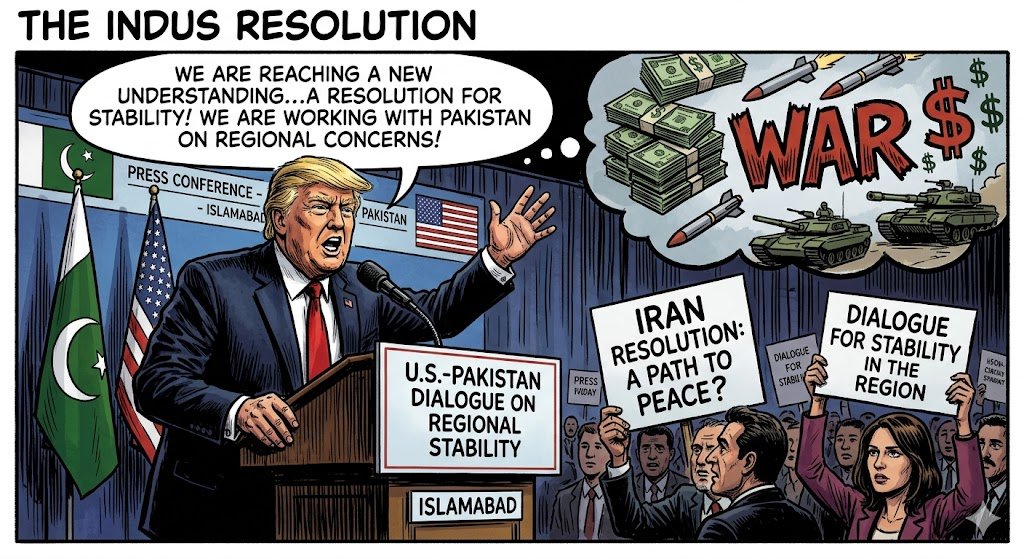

President Donald Trump, now in his second term, has built a political brand on bold Trump war funding claims about foreign wars, often framing himself as the sole defender of American interests against wasteful spending and weak opponents. From Ukraine to the escalating Iran conflict, a clear pattern emerges: exaggerated threats, distorted funding narratives, and accusations that Democrats are sabotaging national security. These Trump war funding claims tactics not only “buy time” politically but also pressure Congress into massive spending bills. Democrats, who championed Ukraine aid under Biden, now face their own divides over Trump’s $200 billion Iran request, highlighting how war rhetoric flips partisan lines. This deep dive exposes the repeated lies, legislative realities, and high stakes for U.S. credibility.
(see the generated image above)
Democrats’ Unwavering Push for Ukraine Aid
When Russia invaded Ukraine in 2022, Democratic leaders in Congress and the Biden White House treated aid as a moral and strategic imperative. Over $175 billion in packages flowed through, covering weapons, humanitarian relief, and economic support—framed as a bulwark against authoritarian expansion. Speaker Nancy Pelosi and Senate Majority Leader Chuck Schumer rallied votes, arguing that abandoning Kyiv would embolden Putin globally.
A pivotal moment came in late 2023: a $110 billion emergency bill bundling Ukraine ($61 billion), Israel ($14 billion), Taiwan, and border security. It stalled not because Democrats balked, but due to every single Republican senator voting to block debate. Hardline GOP members, echoing Trump’s Trump war funding claims stance, demanded stricter immigration reforms first. Trump himself urged rejection on social media, calling it a “betrayal.” Democrats held firm, passing a slimmer Ukraine-Israel package in April 2024 after months of wrangling.
Trump’s counter-narrative? Democrats “gave away” billions—sometimes claiming $300 billion or more—while Zelenskyy “refused peace” and hoarded minerals. These figures tripled actual U.S. direct aid (around $113 billion total by 2025), lumping in European contributions and loans. Fact-checkers like CNN and PolitiFact repeatedly debunked this, noting Ukraine received far less per capita than Israel or even U.S. farm subsidies. Yet the Trump war funding claims stuck, fueling MAGA rallies and midterm gains.
This wasn’t obstruction; it was Democrats dragging a reluctant GOP to the table. By 2025, cumulative delays had slowed weapons deliveries, but the funding pipeline never dried up under Democratic control.
Trump’s Escalating Ukraine Falsehoods
Trump’s Ukraine rhetoric evolved from skepticism to outright fabrication. During his 2024 campaign, he promised to end the war “in 24 hours” via secret Saudi talks—unproven and unfulfilled. Post-inauguration, his 2026 State of the Union speech claimed he’d “ended eight wars” in ten months, reclassifying trade spats and ceasefires as victories. Independent outlets tallied zero full resolutions, with Ukraine still grinding on.
Specific whoppers included Zelenskyy “demanding U.S. minerals” (a distorted negotiation over lithium deposits) and Ukraine “starting the war” by provoking Russia. He tied this to NATO “freeloaders,” ignoring that U.S. aid was 20% loans, much repaid. These Trump war funding claims mirrored his first-term Ukraine scandal, where he withheld aid for dirt on Biden—impeachment fodder that he now spins as foresight.
The emotional hook? Patriotism twisted into victimhood: “Biden and Democrats bled America dry for Zelenskyy’s graft.” Polls showed 40% of Republicans buying it, per Pew, eroding bipartisan consensus. This set a template: inflate costs, villainize foes, demand applause.
Iran’s Volatile Flashpoint: Threats Overblown
Fast-forward to early 2026: Iran’s nuclear program, missile tests, and proxy attacks on U.S. bases reignited tensions. Trump ordered strikes on Fordow and Natanz after a Strait of Hormuz blockade threat, claiming “total obliteration.” Intelligence assessments leaked to the New York Times painted a milder picture—facilities degraded 40-60%, rebuildable in months. Trump’s “Iran nukes America tomorrow” echoed unproven 2010s hawks, despite IAEA reports showing Iran months from weapons-grade uranium.
He linked it to Ukraine: “We wasted stockpiles on Kyiv, now Iran’s laughing.” Precision munitions were low post-Ukraine, true—but replenished via 2025 supplements. This blame game pressured a $200 billion “victory fund” for munitions, bases, and Israel aid. Critics called it blank-check warfare, bypassing War Powers resolutions Democrats once ignored. Trump’s Trump war funding claims here followed the same playbook.
Accusations flew: Democrats “want Iran to win,” per Trump rallies. Yet intel showed Iran’s threats—hypersonic missiles, Hezbollah drones—real but not existential, years from U.S. soil reach.
The $200 Billion Iran Funding Firestorm
Trump’s Pentagon pitch stunned Congress: $200 billion over two years, dwarfing Ukraine totals. Breakdown? $80 billion munitions, $50 billion bases, $40 billion Israel ops, rest logistics. Unveiled March 2026 amid daily strikes, it faced instant backlash.
Democrats splintered. Progressives like Bernie Sanders and AOC decried “forever war,” vowing filibusters without exit strategies. Moderates like Schumer eyed compromises, citing Iran’s Strait disruptions spiking oil to $120/barrel. Republicans, unified behind Trump, floated budget reconciliation to sidestep 60-vote hurdles—ironic payback for Biden’s Ukraine fights.
Trump’s spin? “Small price for peace; Democrats blocked Ukraine, now this.” False on both: Dems led Ukraine aid; Iran hesitation stemmed from strike secrecy, not pacifism. Senate votes killed Democratic war-powers curbs 55-45, with red-state Dems defecting. GOP whispers of shutdowns loomed if funds lagged. These Trump war funding claims amplified the divide.
Economically, it risked inflation—defense stocks soared 15%, but deficits ballooned. Public support? Gallup pegged 52% for strikes, 38% for unlimited funds.
Blame-Shifting: A Bipartisan Flip and Trump war funding claims
Ukraine saw Democrats as hawks, GOP dove-ish. Iran reverses it: Trump Republicans demand blank checks; Democrats play fiscal hawks. Why? War fatigue post-Afghanistan, $34 trillion debt, midterms looming. Trump’s genius—or cynicism—is flipping scripts, painting opponents as traitors regardless.
Comparative Deception Tactics
| Conflict | Trump’s Core Claim | Reality Highlights | Democratic Response | Outcome |
|---|---|---|---|---|
| Ukraine | Dems wasted $300B+, Zelenskyy corrupt, GOP blocked wisely | Actual $113B (loans heavy); Dems passed despite GOP no-votes | Led 4 major bills; compromised on borders | Aid flowed, war ongoing |
| Iran | Nukes imminent; $200B “small” for win; Dems sabotage | Facilities hit but intact; threats 2-5 years out | Split: oversight demands vs. some support | Funding stalled; strikes continue |
Numbers tell the tale: Trump’s Trump war funding claims inflate 2-3x (Ukraine aid, Iran damage). Dems’ role inverts—pro-aid to skeptical—as his narrative adapts.
Broader Implications for Democracy
These patterns erode trust. Ukraine aid saved lives but fueled “swamp” myths. Iran risks quagmire, with 5,000 U.S. troops exposed. Trump’s “buying time” via Trump war funding claims delays accountability—Congress funds reactively, public divides deepen. Is Iran heading towards a dangerous point in time?
Globally, allies waver: NATO questions U.S. reliability; Saudi Arabia hedges with China. Domestically, it rallies bases but alienates indies (Rasmussen: 45% doubt Iran threat). Fact-checkers log 50+ war whoppers since 2025, yet Truth Social amplifies unchecked.
The Path Forward?
Bipartisan commissions could verify claims pre-funding. Media literacy campaigns counter spin. Voters demand records over rhetoric. Until then, Trump’s war of words outpaces bullets—profitable politically, perilous practically. As Iran drones buzz and Kyiv holds, one truth endures: facts don’t vote, but they should. Will the peace talks work and will Iran attend?


0 Comments