
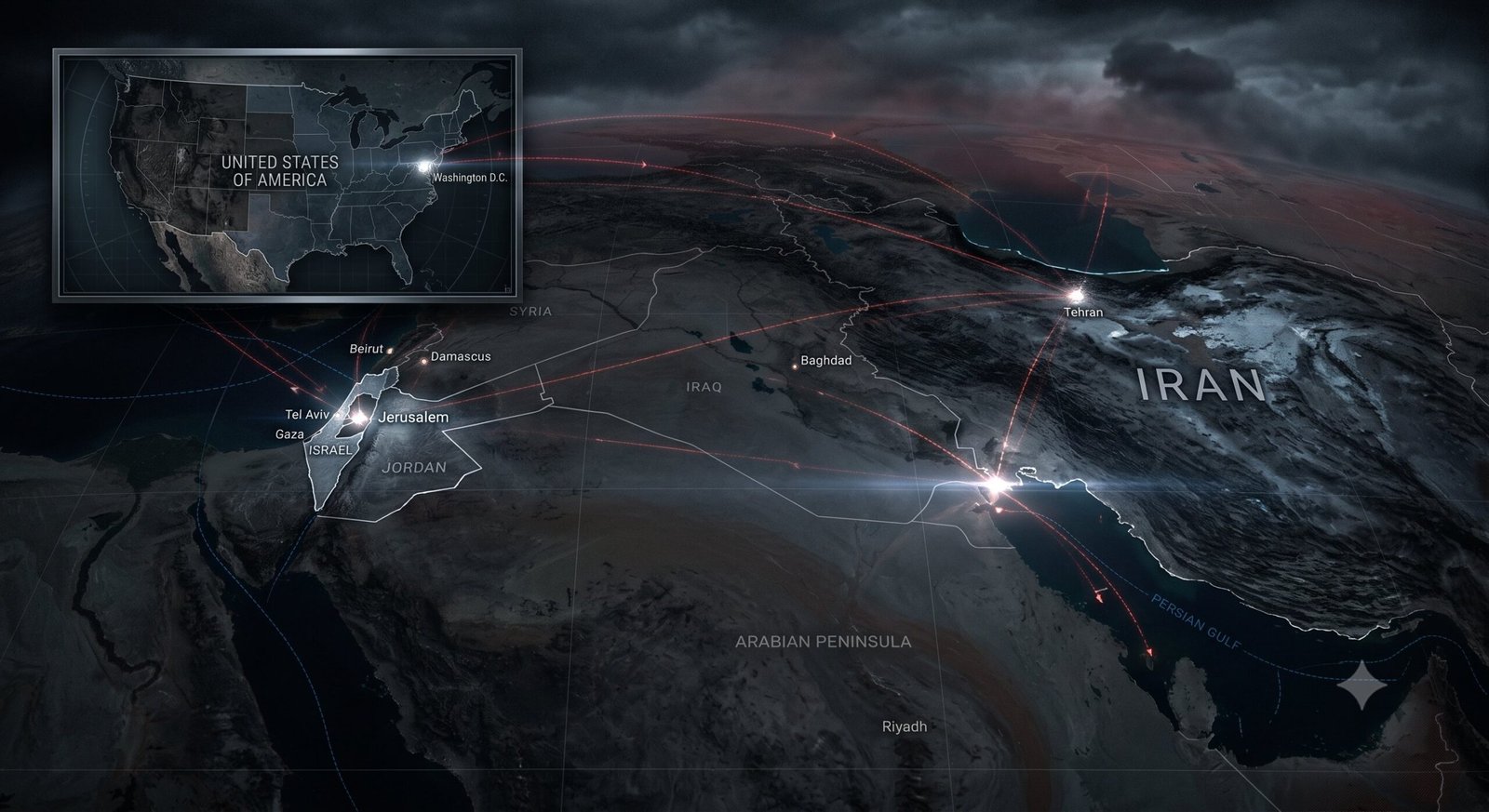

War is almost always introduced to the public through the vocabulary of force. Missiles are launched, alliances are tested, threats are issued, retaliation follows, and the world watches the choreography of escalation unfold in real time. But beneath the spectacle of military action lies a more consequential theater: the interior world of the people making the decisions. In the case of the Iran war, the most revealing battlefield may not have been the skies over Tehran, Tel Aviv, or the broader regional theater, but the private architecture of fear, memory, pride, and survival inside the minds of the leaders themselves. That is where Iran war leadership psychology becomes not just an analytical lens, but the central story.
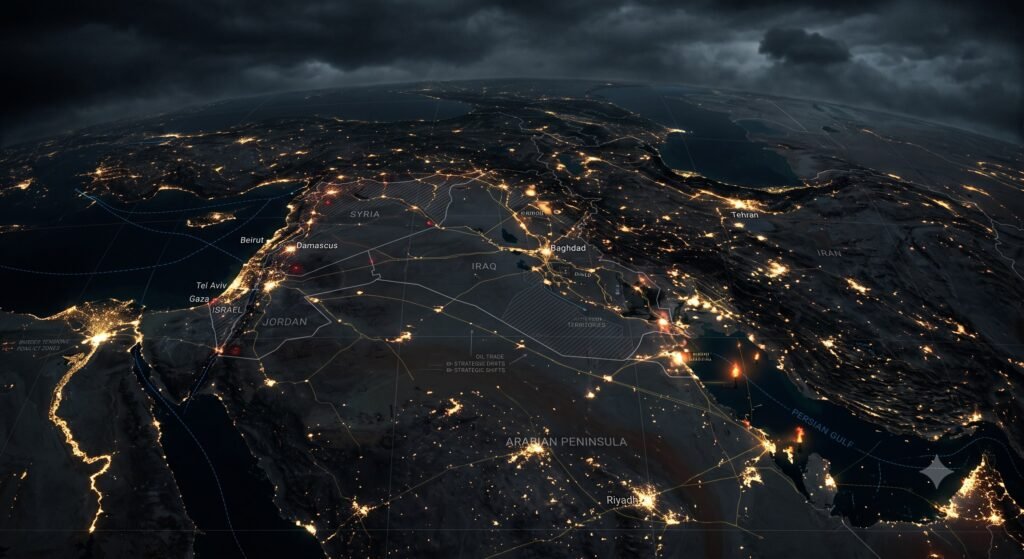
The conflict did not arise from a vacuum. It moved through a recognizable escalation pattern: diplomatic pressure, strategic warnings, military strikes, retaliatory responses, information warfare, and a broader regional widening of tension. Public reporting and timeline analyses show a sequence that was less like a sudden eruption and more like a pressure system slowly building until it could no longer contain itself. This matters, because leaders rarely act only in response to the present moment. They also respond to inherited trauma, domestic audiences, strategic doctrine, and the unbearable fear of looking weak. In other words, the war was not only fought over territory or deterrence; it was fought over perception, legitimacy, and the right to define reality.
The Iranian state mind
To understand the Iranian side, one must first understand that wartime leadership in Iran is often shaped by a psychology of endurance. Reporting on Iran’s leadership dynamics during conflict suggests a structure that becomes more collective and security-driven under pressure, with command and control adapting around survival, internal cohesion, and symbolic resistance. This is not merely political behavior. It is a civilizational posture. The state appears to tell itself a recurring story: we have endured before, we are under siege again, and therefore we must not bend.
That story creates a particular emotional tone. It is hard, disciplined, and resistant to humiliation. It also carries a deep undercurrent of grievance. The leadership mind, in such a context, may not express vulnerability openly, but vulnerability is still there, embedded beneath layers of ritual, ideology, and strategic patience. This is where Iran war leadership psychology becomes especially important: the leadership is not just calculating military options, it is trying to preserve a sense of historical dignity under pressure. That can produce remarkable stamina, but it can also narrow the emotional field until every compromise feels like surrender.
The Israeli strategic psyche
The Israeli leadership psyche in the Iran conflict is shaped by a different but equally intense burden: existential vigilance. Public discourse and long-running strategic commentary have framed Iran not as an ordinary adversary, but as an enduring threat to national security and regional stability. That framing changes everything. When a state believes it is facing a threat that cannot be ignored or normalized, leadership begins to operate through preemption, deterrence, and a constant sense of urgency.
Emotionally, this creates a posture of compressed time. Decisions feel as though they must be made quickly, cleanly, and decisively, because delay may be interpreted as danger. The strategic mind becomes alert, technically sharp, and often morally absolute. The spiritual cost, however, is that such vigilance can harden into suspicion. Once a state becomes accustomed to reading the world through threat detection, the line between actual danger and inherited fear can become blurred. In the language of Iran war leadership psychology, Israel’s challenge is not simply military: it is whether the leadership can remain strategically clear without becoming captive to a permanent siege mentality.
The American decision-maker
The American leadership position in this conflict appears more transactional, but that does not mean it is emotionally neutral. U.S. decision-making in war tends to combine force projection, alliance management, domestic political optics, and messaging to both allies and adversaries. This produces a distinctive leadership style: one that often prefers flexibility over doctrinal purity, leverage over permanence, and symbolic strength over direct entanglement. The result is a mind that is often practical, but also fragmented by competing imperatives.
At its best, this mindset can restrain escalation and prevent open-ended war. At its worst, it can drift into strategic improvisation, where force is used as a language of dominance rather than a tool for durable peace. Emotionally, the American posture can oscillate between confidence and impatience. Spiritually, the deeper question is whether power is being used to reduce suffering or merely to preserve credibility. In the framework of Iran war leadership psychology, the U.S. leader is not just a strategist; he is also a manager of national ego, global expectation, and the burden of consequence.
Emotional quotient in wartime
If we measure these leaders through emotional quotient, we are not asking whether they are sentimental. We are asking whether they possess the capacity to regulate fear, absorb ambiguity, and resist reactive escalation. That is the real test of wartime leadership. A leader with high EQ can feel the pressure without becoming consumed by it. A leader with low EQ may mistake anger for clarity, and certainty for wisdom.
The emotional pattern in war often looks like this:
- Fear becomes doctrine.
- Wound becomes identity.
- Pride becomes policy.
- Revenge becomes legitimacy.
This is why Iran war leadership psychology cannot be understood through military logic alone. A missile strike may be tactical, but the decision to launch it often carries a psychological residue that predates the immediate event. Leaders are rarely responding to just one attack; they are responding to history, humiliation, expectation, and the imagined judgment of their own people.
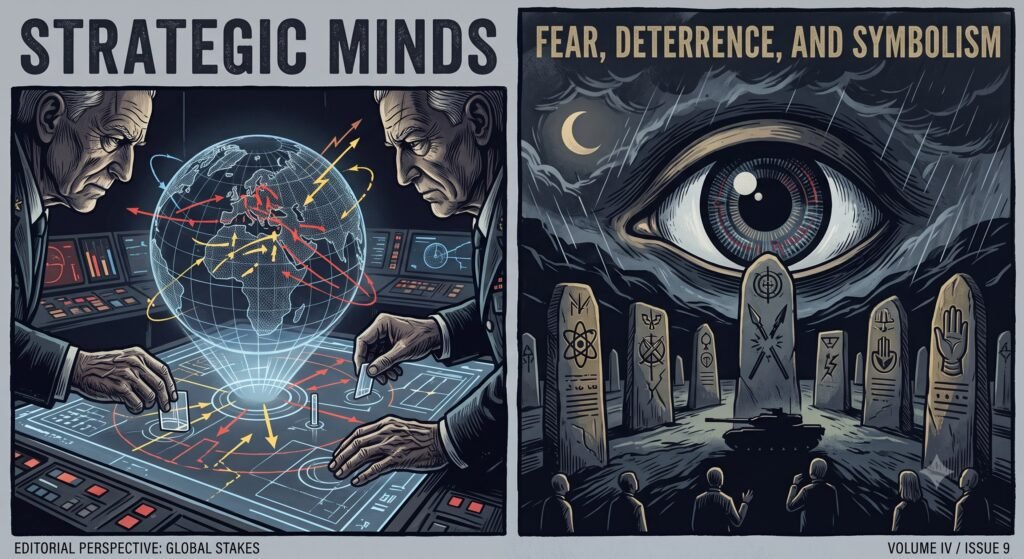
Spiritual quotient in power
If emotional intelligence is about regulation, spiritual intelligence is about transcendence. It asks whether a leader can see beyond ego, beyond domination, and beyond the intoxication of power. It asks whether the leader can protect life without dehumanizing the other side. It asks whether the state can remain morally awake even while preparing for conflict.
This is where the deepest weakness of modern war becomes visible. Many leaders are technically brilliant and emotionally armored, but spiritually underdeveloped. They know how to win arguments, signal strength, and command institutions. They do not always know how to remain inwardly free. In the context of Iran war leadership psychology, spiritual quotient becomes the rarest and most valuable measure of all. It is the ability to act without being ruled by revenge, to defend without worshipping force, and to lead without becoming possessed by the machinery of power.
The war as a mirror
The most sobering truth is that wars often reveal the inner condition of the states that wage them. A traumatized state speaks in absolutes. A besieged state speaks in survival language. A superpower speaks in the grammar of leverage. Each voice is understandable. None is sufficient for peace. The Iran conflict, in this sense, is not only a confrontation of armies; it is a mirror reflecting the unresolved psychological and moral tensions inside each leadership class.
That is why an article on Iran war leadership psychology should not try to reduce leaders to villains or heroes. The more intelligent approach is to show how fear, memory, identity, and moral imagination shape decisions under pressure. Once that is visible, the reader begins to understand that modern warfare is rarely only about strategy. It is also about the emotional biography of power.
Closing reflection

In the end, the true measure of leadership in war is not simply the ability to strike, survive, or dominate. It is the ability to remain human while holding the machinery of violence in one’s hands. That is where the emotional quotient ends and the spiritual quotient begins. And that, ultimately, is the hidden frontier of Iran war leadership psychology — the place where history is not only made, but spiritually revealed.
0 Comments