
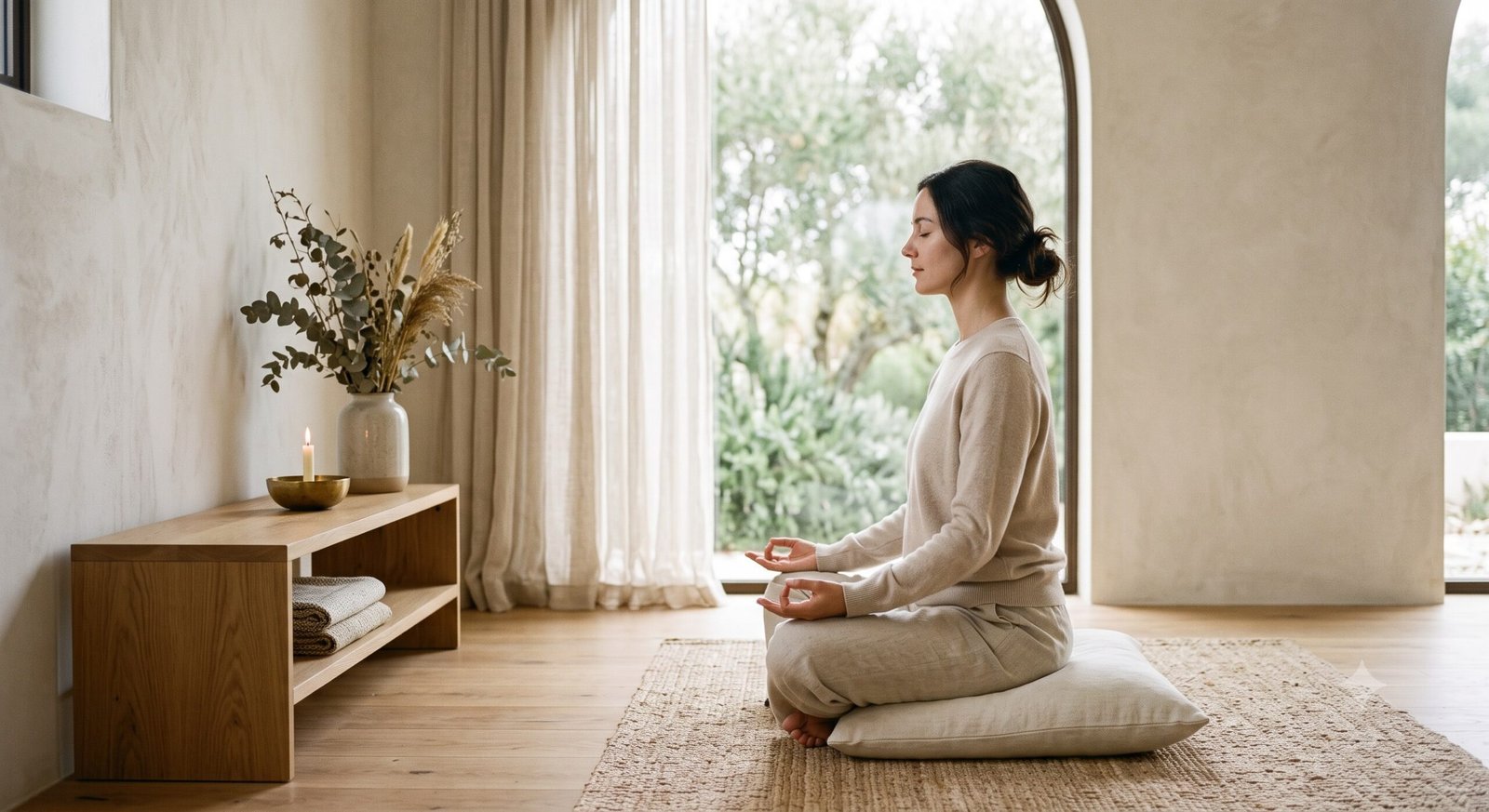

Master quiet, powerful breathing techniques that soothe your nervous system—without sounding like a cinematic villain.
I have seen it countless times—someone sits down to “relax,” closes their eyes, and begins breathing so loudly and forcefully that it feels like a performance. The room fills with exaggerated inhales and dramatic exhales. Instead of calm, there is tension. Instead of stillness, there is effort. Here are some breathing techniques that could help immnsely.
Somewhere along the way, we started equating deep breathing with heavy breathing.
And that is where things go wrong.
Because true calm does not arrive with noise. It arrives with subtlety.
The nervous system does not need theatrics—it responds to gentleness, rhythm, and safety.
In my own journey through breathwork, wellness coaching, meditation and mindful practices, I have learned this: the most powerful breathing techniques are almost invisible.
Why Loud Breathing Backfires
Let us understand what is happening beneath the surface.
When you breathe too forcefully:
- You activate effort rather than relaxation.
- You may overstimulate the sympathetic nervous system.
- You create internal pressure instead of ease.
- You turn a calming practice into a performance.
The irony is striking—you try harder to relax, and end up more agitated.
Real breathwork is not about volume. It is about regulation.
The Principle of Subtle Breath
Think of refined breathing like a luxury experience—not loud, not flashy, but deeply effective.
The breath should:
- Be quiet enough that someone sitting next to you barely notices.
- Flow smoothly without jerks or pauses.
- Feel effortless, not engineered.
- Expand the body gently rather than forcefully.
When done right, it feels less like “doing” and more like “allowing.”
Technique 1: The Whisper Breath
This is my go-to method for professionals who want calm without attention.
How to practice:
- Inhale softly through the nose for a count of 4.
- Exhale gently through the nose for a count of 6.
- Keep the breath so quiet it feels like a whisper inside your body.
- Let the shoulders remain completely relaxed.
Why it works:
The extended exhale activates the parasympathetic nervous system, signaling safety and calm without triggering strain.

Technique 2: The Micro Pause Method
Most people rush their breathing. This technique introduces stillness.
How to practice:
- Inhale naturally (do not deepen it artificially).
- Pause gently for 1–2 seconds.
- Exhale slowly and silently.
- Pause again for 1–2 seconds.
Why it works:
These tiny pauses reset your breathing rhythm and bring awareness back into the body. The pauses are not held—they are simply allowed.
There is a quiet intelligence in these pauses—a moment where the body recalibrates itself without interference.
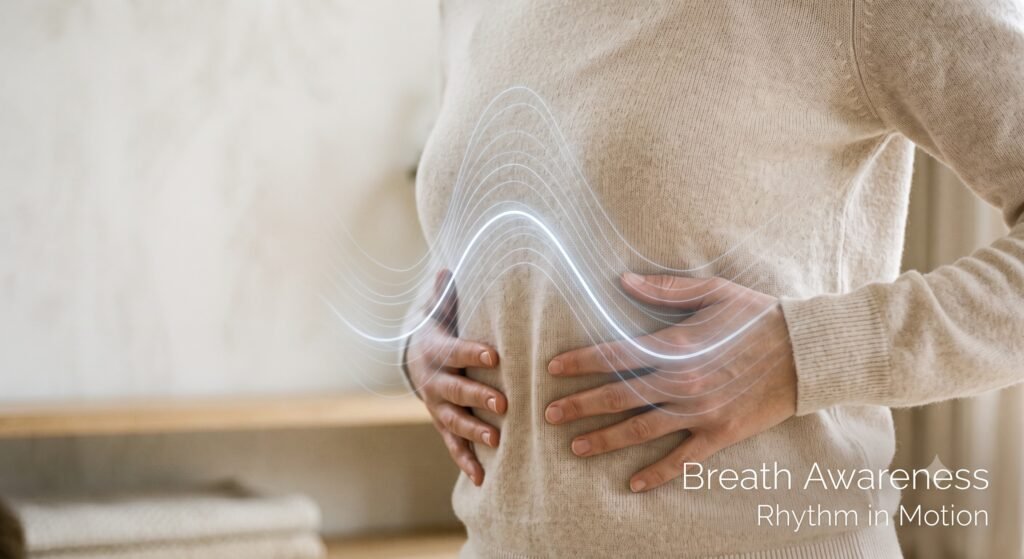
Image Suggestion: Minimalist visual showing breath rhythm—soft flowing wave lines fading in and out.
Alt Text: Visual representation of slow, rhythmic breathing with gentle pauses
Technique 3: The Nasal Flow Reset
If your breathing sounds loud, it is often because you are overusing the mouth.
How to practice:
- Close the mouth gently.
- Breathe only through the nose.
- Imagine the air moving smoothly along the nasal passage.
- Keep the airflow light and continuous.
Why it works:
Nasal breathing naturally regulates airflow, improves oxygen exchange, and reduces over-breathing.
It is also inherently calming—almost as if the body recognizes this as its default, most efficient state.
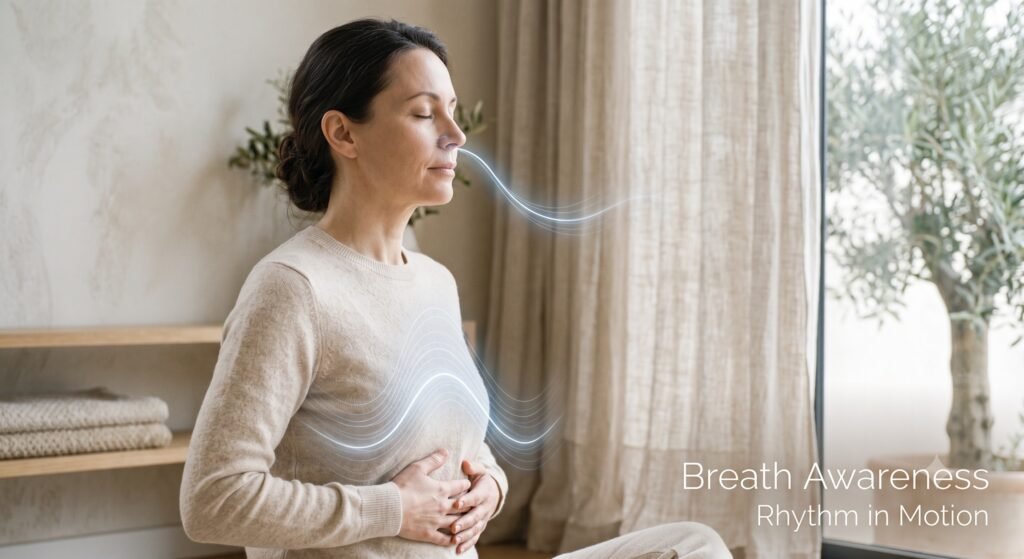
Image Suggestion: A calm individual seated near natural light, eyes closed, breathing through the nose with relaxed facial muscles.
Alt Text: Nasal breathing technique promoting calm and nervous system balance
Technique 4: The Invisible Expansion
This technique refines how the body moves with the breath.
How to practice:
- Place awareness in the lower ribcage.
- Allow the ribs to expand slightly sideways as you inhale.
- Let them soften back on the exhale.
- Avoid lifting the chest dramatically.
Why it works:
This creates efficient breathing without exaggerated movement, keeping the process grounded and controlled.
The movement is so subtle, it feels almost like it is happening on its own.
The Shift from Effort to Elegance
Breathing is not meant to be impressive. It is meant to be effective.
There is a certain elegance in subtlety—something I emphasize deeply in my work with high-performing individuals and those seeking refined wellness experiences.
You do not need to sound like you are summoning energy.
You simply need to create space for it.
When the breath becomes quieter, the mind follows.
When the mind settles, clarity emerges.
And when clarity emerges, everything—from decision-making to emotional balance—begins to elevate.
A Final Reflection on Breathing Techniques
The next time you sit down to breathe, ask yourself:
Am I trying to control my breath… or am I allowing it to guide me?
Because the real transformation happens not in intensity, but in awareness.
And awareness, like the most powerful forces in life, does not announce itself loudly.
It moves quietly. Effortlessly. Precisely.
Just like the breath should.
0 Comments