
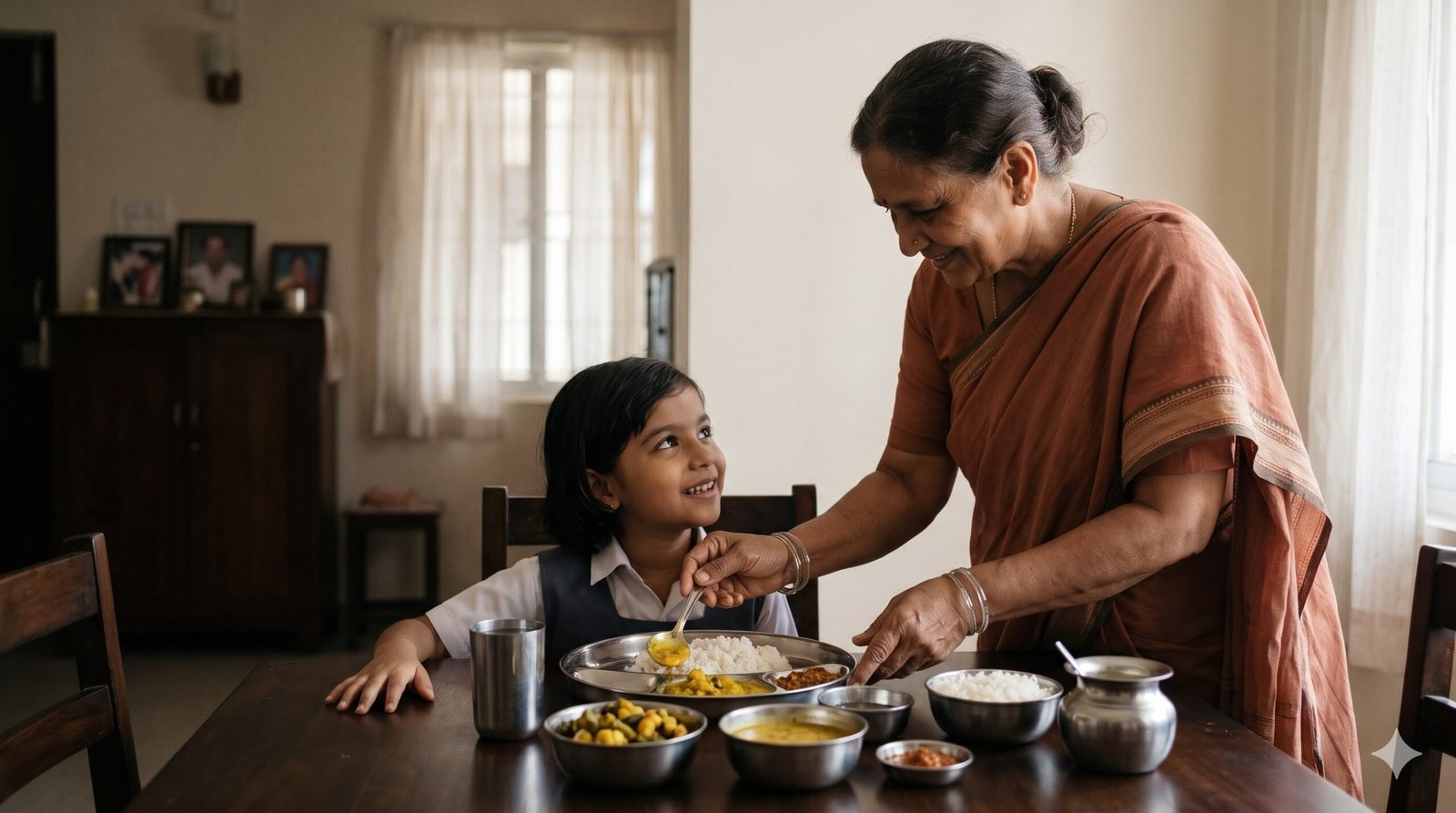

Perhaps the secret is not that one grandmother cooks better, but that her food reaches us through a different story.
Ask someone whose grandmother made the best food, and you may receive an answer delivered with the confidence usually reserved for matters of national importance.
“Naani, obviously.”
Someone else will defend Daadi’s parathas, pickles or Sunday lunches with equal conviction.
In Telugu-speaking families, the conversation might become a comparison between Ammamma’s cooking and Nanamma’s. The names change, but the affection behind the argument remains familiar.
Yet the question is more interesting than it first appears. Could the preference have something to do with genetics? Does a woman who raises a daughter pass on something different from a woman who raises a son? Could a child begin becoming familiar with a grandmother’s flavour traditions before birth?
And why do grandmother-inspired food brands feel so immediately reassuring?
There is a fascinating story here—but it requires separating what science supports from what family memory makes us believe.
Naani’s cooking may not be universally better than Daadi’s. It may simply arrive at the table with a different history.
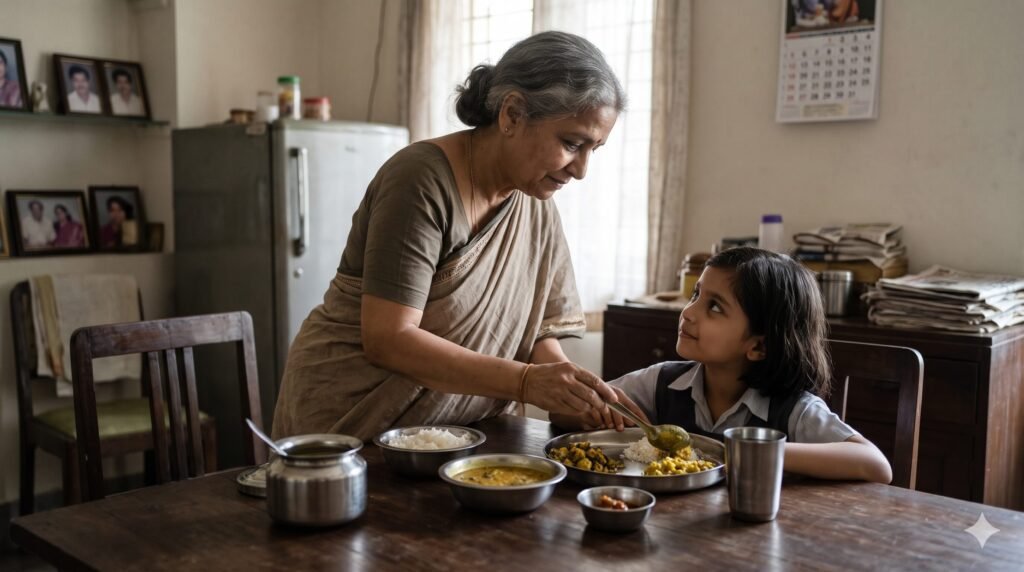
What Do We Mean When We Say “Better”?
Before choosing a winner, we need to understand the competition.
“Better” might mean more nutritious, more skilfully prepared, more indulgent or simply closer to the food we already enjoy.
Those are not interchangeable.
A child may prefer one grandmother’s sweeter dessert without that dessert being the healthier choice. An adult may miss a rustic dal more than an elaborate restaurant meal because the dal belongs to a cherished chapter of life.
For this discussion, “better” means the food a particular person finds more enjoyable or emotionally meaningful—not an objective ranking of grandmothers.
That distinction allows us to explore the question without turning affection into an unfair family hierarchy.
The First Flavour Connection May Begin Before Birth
One of the most intriguing scientific findings is that flavour learning can begin before a baby eats solid food.
Some flavour compounds from a pregnant woman’s diet enter the amniotic fluid that the fetus swallows. After birth, some dietary flavours also appear in breast milk. These experiences can introduce elements of the family’s food environment surprisingly early.
In a controlled study, mothers consumed carrot juice during pregnancy or breastfeeding. When their babies later tasted carrot-flavoured cereal, the previously exposed babies showed fewer negative facial expressions than babies without that exposure. This supported the idea of early flavour learning. It did not establish a lifelong preference or compare grandmothers’ cooking.
Now consider a possible family connection.
A woman grows up enjoying her mother’s cooking. During pregnancy, she continues eating similar foods. Later, she prepares related dishes at home.
Her child may therefore encounter elements of that flavour tradition at several stages.
If those dishes resemble Naani’s cooking, Naani’s food could feel especially familiar.
That is a plausible application of the research—not a scientifically demonstrated “Naani effect.”
Crucially, the same explanation could favour Daadi. If the mother mainly eats her mother-in-law’s cooking during pregnancy and breastfeeding, the child’s early exposure may reflect that kitchen instead. The mechanism follows the food, not the family title.
Can Genetics Make Us Prefer One Grandmother’s Food?
Genetics can influence how we experience flavours.
For example, variants of the TAS2R38 gene affect sensitivity to certain bitter compounds. Research also identifies genetic contributions to aspects of food preference, although liking a complete dish is much more complicated than carrying a particular taste-related variant.
A child might therefore inherit a palate that happens to suit one grandmother’s cooking.
But there is no basis for assuming that this must be Naani.
Children inherit nuclear DNA through both parents, and taste-related genetic influences are not reserved for the maternal side. Genetics may help explain why family members experience the same food differently; it does not establish that one grandmother’s recipes are naturally superior.
There is a special maternal inheritance pathway: mitochondrial DNA passes from mother to child. However, that fact does not demonstrate a preference for maternal-grandmother cooking. A genuine biological connection should not be stretched into a culinary claim that the evidence does not support.
In other words, there is no established “Naani’s food gene.”
Does Having a Daughter Make a Woman a Better Cook?
This is where the question about male and female children becomes especially interesting.
Does raising a daughter somehow improve a woman’s ability to cook? Does raising a son create a different kind of kitchen?
The research discussed here does not demonstrate that having a female child makes a woman’s food tastier, or that having a male child makes it less appealing. Studies of early flavour exposure concern learning in the baby, not an improvement in the mother’s cooking ability.
But there is a different possibility worth considering: not a biological change in cooking, but a difference in how cooking traditions travel.
Imagine a mother who teaches her daughter family recipes. Years later, that daughter continues making them for her own children.
The grandmother’s style has travelled through a mother–daughter connection.
Now imagine a mother who teaches her son those same recipes. He grows up cooking them for his children.
The tradition travels just as successfully through a mother–son connection.
These are illustrative family pathways, not universal descriptions of children. The important variable is who learns, remembers, prepares and shares the food—not the child’s sex.
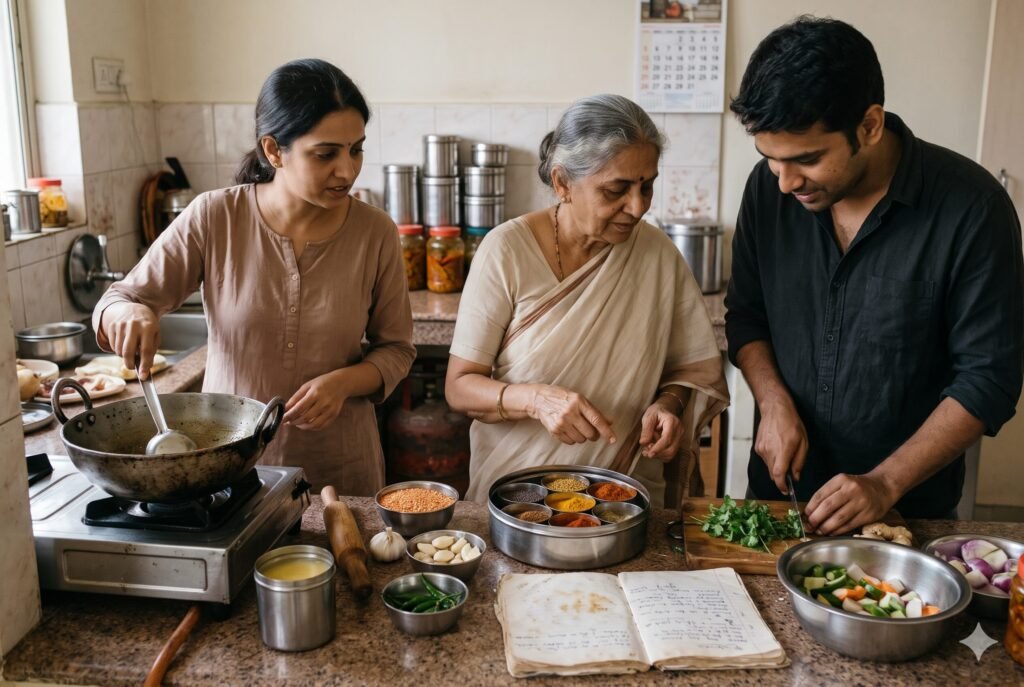
The Same Woman Can Be Both Naani and Daadi
There is a wonderfully simple challenge to the idea that Naani is inherently the better cook.
The same woman can be Naani to her daughter’s children and Daadi to her son’s children.
Her culinary skills do not change when a different grandchild enters the room.
Her recipes may be identical. Her experience is identical. Yet the children may have different preferences.
One child might eat her food every week. Another might encounter it only during holidays. One might love her tangy dishes; another might prefer milder flavours.
This suggests a more useful question:
Not “Which kind of grandmother cooks better?” but “What makes this grandmother’s cooking special to this child?”
That moves the conversation from a gendered ranking to a relationship worth understanding.
Is Naani’s House Associated With Holidays and Favourite Foods?
Here is another plausible explanation—one that depends entirely on the family.
Suppose a child lives with the paternal grandparents. Daadi’s cooking may be part of ordinary life: weekday meals, breakfast before school and vegetables that need finishing.
Naani’s house, meanwhile, might mean school holidays, favourite sweets and a meal prepared specially for the child’s arrival.
We would then be comparing more than two cooks.
We would be comparing routine with celebration.
The preference might partly concern what each visit represents.
But reverse the arrangement, and the explanation could reverse too. A child raised near Naani may associate Daadi’s house with exciting visits and special dishes.
This is a family-level hypothesis, not an established rule about Indian households. It reminds us to ask about the circumstances surrounding the meal before attributing a preference to biology.
Attention May Matter More Than the Family Title
Some research reports greater maternal-grandparent involvement in the populations studied. Researchers discuss this as a matrilateral bias: a tendency toward greater investment on the mother’s side. These findings concern involvement and support, not superior cooking or greater love.
It is tempting to extend those findings into the kitchen, but we should do so cautiously.
A grandmother who spends more time with a child might have more opportunities to discover how that child likes food served.
Does the child prefer a crisp dosa or a soft one? Less chilli? Rice mixed before serving? A particular vegetable cut smaller?
That is a plausible explanation for a better match between cook and eater, not a conclusion established by the grandparent studies.
And it could favour either grandmother. The relevant question is who knows this child’s preferences—not which side of the family she belongs to.
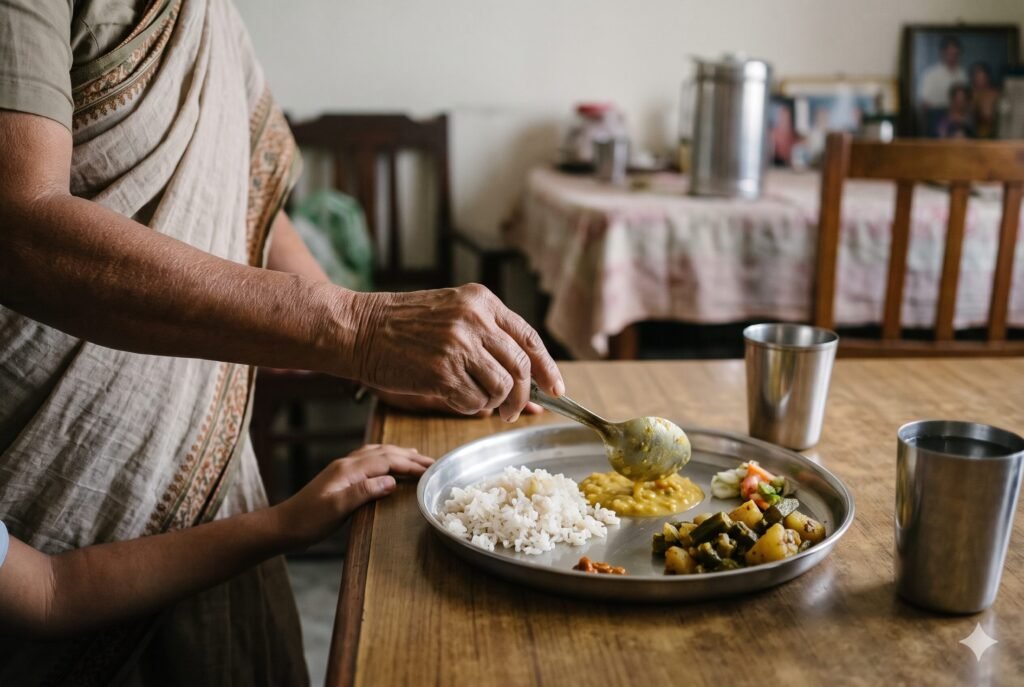
Why Do Naani’s and Ammamma’s Make Appealing Food-Brand Names?
Your observation about restaurant names opens another useful angle.
Naani’s Pure Veg is listed in Hyderabad. Ammamma’s markets traditional food products through the idea of grandmotherly care. Dadi Ki Rasoi also exists, including a restaurant listing in Kanpur. These examples show that businesses draw on both maternal- and paternal-grandmother identities. They do not establish which category is more common overall.
What they do reveal is a powerful branding idea.
A grandmother’s name can suggest a kitchen with a history: familiar recipes, personal attention and food connected to family.
Ammamma’s explicitly uses grandmother-inspired language in presenting its products. Reporting on Delhi’s Nanama similarly connects the restaurant with heirloom recipes and the warmth of a family kitchen.
Broader restaurant coverage also identifies interest in nostalgic, home-style dining. The commercial appeal is therefore not evidence that maternal grandmothers possess better cooking biology. It is evidence that family food memories offer businesses a compelling story.
Even the name may reflect the founder’s perspective. A woman remembered as Naani by one founder could have been remembered as Daadi by her cousin.
The cook has not changed. The storyteller has.
Could We Test the Preference Without Starting a Family Argument?
A small, playful tasting could help distinguish the food from its label.
Both grandmothers could prepare the same dish, served in identical bowls without identifying the cook. The child could describe what they enjoy rather than being pressured to declare a winner.
Repeating this with different dishes would be more informative than a single comparison.
If the child consistently prefers one version without knowing who made it, that would suggest a preference for its sensory qualities.
If the preference changes after the cook is revealed, expectations or personal associations might be contributing.
Neither outcome would prove a genetic explanation. Nor would it rank either grandmother’s overall cooking ability.
The exercise would simply make the original question more precise.
So, Why Does Naani’s Cooking Feel Better?
For some children, it may resemble the mother’s everyday cooking. For others, it may belong to holidays, special attention or a particular set of favourite dishes.
Early flavour learning offers a scientifically supported mechanism that could contribute to familiarity, but it does not automatically favour the maternal grandmother. Genetics influences parts of taste perception, but does not establish a Naani advantage.
The role of daughters and sons is better explored through participation: who learns the recipes, who cooks them later, and who carries the stories forward.
Perhaps the fairest answer is also the most affectionate:
Naani’s cooking is not necessarily better than Daadi’s.
It may simply tell a story that one child recognises more readily.
And in another home, with another childhood and another favourite dish, Daadi’s food will tell that story best.


I liked the way you wrote how food is not just about taste, but also the stories, the emotions and the way each recipe is passed on to the next generations. Nice read indeed.
Thank you Mr. Gupta,
If you come to really think about it, it is! No?
Best Regards
Anil
Wow! Such an adorable topic to scan over! And yes, it is really about how each person relate to their Dadi/Nani respectively, and the comfort and belongingness they harbor.
Our former years and core memories largely shape our sense perception, and grandparents often play the key role in it.
Fascinating and heartwarming to read!
Thank you Damini,
For me, food is not just something I survive on.
It is about the love it contains, reminiscences it brings and the satisfaction.
Taste, I feel, all of these put together throwing in, the sight and the aroma of it.
Happy that you liked it.
Regards
Anil